
Best small podcast and livestream sound mixer? Mackie DLZ XS
· Audio · Recorders · 17:24
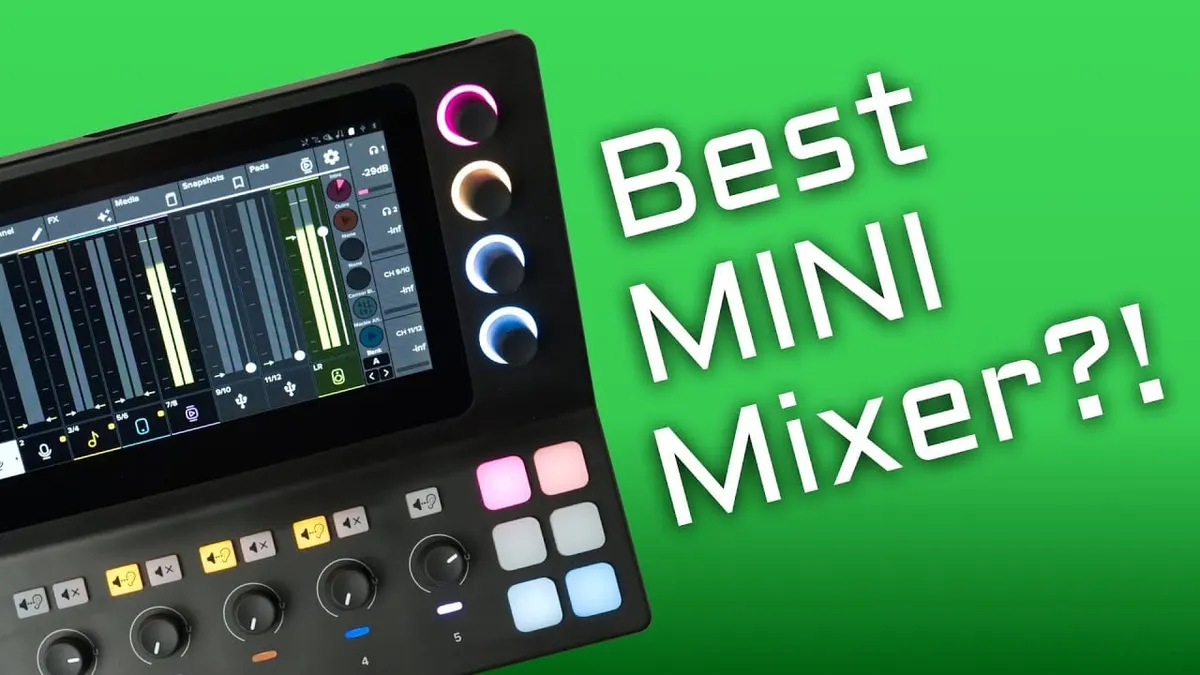
In this episode we review the Mackie DLZ Creator XS. This podcast/livestream/creator audio mixer competes most directly with the RODECaster Duo. It is nearly half the size of the Mackie DLZ, but has most of the same, amazingly powerful features. Let’s have a closer look and a listen!
Comparison of RODECaster Pro II, Mackie DLZ Creator, and Mackie DLZ Creator XS: https://airtable.com/appVVnGih7dAdxBD… Video covering how to get audio from your podcast mixer to your livestream:
• Getting Audio from your mixer to your…
Gear used or mentioned
The links below are Amazon, B&H Photo, Sweetwater, or other affiliate links. As an affiliate, I earn from qualifying purchases.
- Mackie DLZ Creator XS adaptive digital mixer — B&H, Sweetwater, Amazon
- Mackie DLZ Creator adaptive digital mixer (the big brother) — B&H, Sweetwater, Amazon
- RODECaster Pro II digital mixer — B&H, Sweetwater, Amazon
- RODECaster Duo digital mixer — B&H, Sweetwater, Amazon
- RODECaster Steamer X USB audio and video interface — B&H, Sweetwater, Amazon
- Earthworks ETHOS microphone — B&H, Sweetwater, Amazon
- Impact Turtle-Base C-Stands — B&H, Amazon
- Aputure LS 600x Pro Bicolor LED Light — Aputure, B&H, Amazon
- Aputure Light Dome III Softbox — Aputure, B&H
- Amaran 300c RGBWW Single-Point LED Light
- Amaran Spotlight SE — Aputure, B&H, Amazon
- Rosco Prismatic Glass Gobo in Cool Lavender — B&H
- Canon C70 Cinema Camera — B&H
- Canon RF 24-70 f/2.8 lens — B&H, Amazon
- Panasonic GH5 camera — B&H, Amazon
- Panasonic 12-35mm f/2.8 II lens — B&H, Amazon
Read the transcript
A review of the Mackie DLZ Creator XS, a smaller sibling to the original DLZ Creator, compared throughout to the Rodecaster Pro II and Zoom Podtrak line.
Like the original, it has Easy/Enhanced/Pro modes for different skill levels and a one-touch automatic gain-setting feature that works well. It’s roughly half the size of the original DLZ but keeps a 7-inch anti-glare screen, larger than the Rodecaster Pro II’s or any Podtrak screen, with no glare issues found even under studio lighting.
To achieve that smaller size, it drops from 4 XLR/combo inputs down to 2 (more like a Rodecaster Duo), replaces linear sliding faders with 5 rotary knob faders (2 for the XLR inputs, 3 assignable to phone/computer/pad playback), and reduces from 5 to 4 context-aware effect knobs versus the original DLZ. Mic preamps supply up to 80dB of gain — enough to run a Shure SM7B or any other gain-hungry dynamic mic without a Cloudlifter or FetHead. It has true balanced quarter-inch line-level outputs (unlike the Rodecaster Pro II’s slightly odd non-standard line-level implementation), 6 sound-effect/media playback pads, NDI audio support over Ethernet (send/receive audio to/from a computer or another NDI device — a feature not found on competing podcast mixers), automix for the two mic inputs, and per-input EQ/noise-gate/compressor/de-esser plus a main-bus EQ and compressor (useful for taming multiple people talking over each other). The context-aware knob layout (4 knobs whose function changes per menu, e.g. threshold/ratio/attack/release for the compressor) was found easier to dial in settings with than the Rodecaster’s single scroll-and-press knob.
Other features: adjustable audio delay up to 250ms to resync with video encoding latency (or handle that in OBS instead); full 14-channel USB audio interface functionality; onboard recording to a USB drive or microSD card, either as a stereo mix or all individual channels plus the mix; a one-tap mix-minus switch per channel for remote guests to avoid hearing themselves echo back; custom per-headphone-output mixes; and headphone outputs strong enough to drive 300-ohm headphones with ease. A clean-preamp test (dummy XLR/150-ohm resistor at 76dB gain) measured -71 dB RMS max — very clean, meaning room noise and mic self-noise become your limiting factors, not the preamp. Build is mostly plastic with some metal; the original DLZ has held up well over about 9 months of regular use, and the XS appears built from similar materials.
The kit includes the mixer, AC adapter, and USB-C cable, priced at $499 US.
Cons: no physical master fader (only a virtual one on the touchscreen, less satisfying for live fade-outs); measured latency of 5ms input-to-output (comparable to the original DLZ, slightly better than the Rodecaster Pro II’s 6ms, though the original Rodecaster came in at 3ms); no 3.5mm unbalanced output for easy connection to consumer cameras; no threaded mounting tap or VESA mount (unlike the Rodecaster Pro/Duo); and it must be powered via its included AC adapter, not natively via USB-C/battery bank like the Rodecaster Pro II.
Personal take (disclosure: the Rodecaster Pro II was purchased personally; both DLZ units were provided free by Mackie with no payment for the review and no obligation to return them): for a typical two-person livestream/podcast setup, the DLZ Creator XS has become the go-to choice out of a large collection of available gear (including high-end rack processors), mainly for ease of workflow and sound quality. Rode has since acquired Mackie, adding some uncertainty about the DLZ line’s future, but the hope is it continues. If you need Bluetooth/vase mounting, USB-battery-bank powering, or MIDI-controller functionality, the Rodecaster Pro II covers those the DLZ XS doesn’t; if you need direct Rode Wireless Go/Me/Pro receiver integration, the Rodecaster Pro II is also the better fit. The Zoom Podtrak line is serviceable and notably cheaper but felt quirkier in day-to-day use (e.g., limits on stacking multiple effects) — fine if it’s already working for your workflow. Ultimately there’s no universal best choice; pick based on which specific features matter most for your setup. Get out there, make some great sound, and we’ll talk to you again soon.