
Cheap vs. Expensive XLR Audio Cables: What's The Difference?
· Audio · Accessories · 6:08
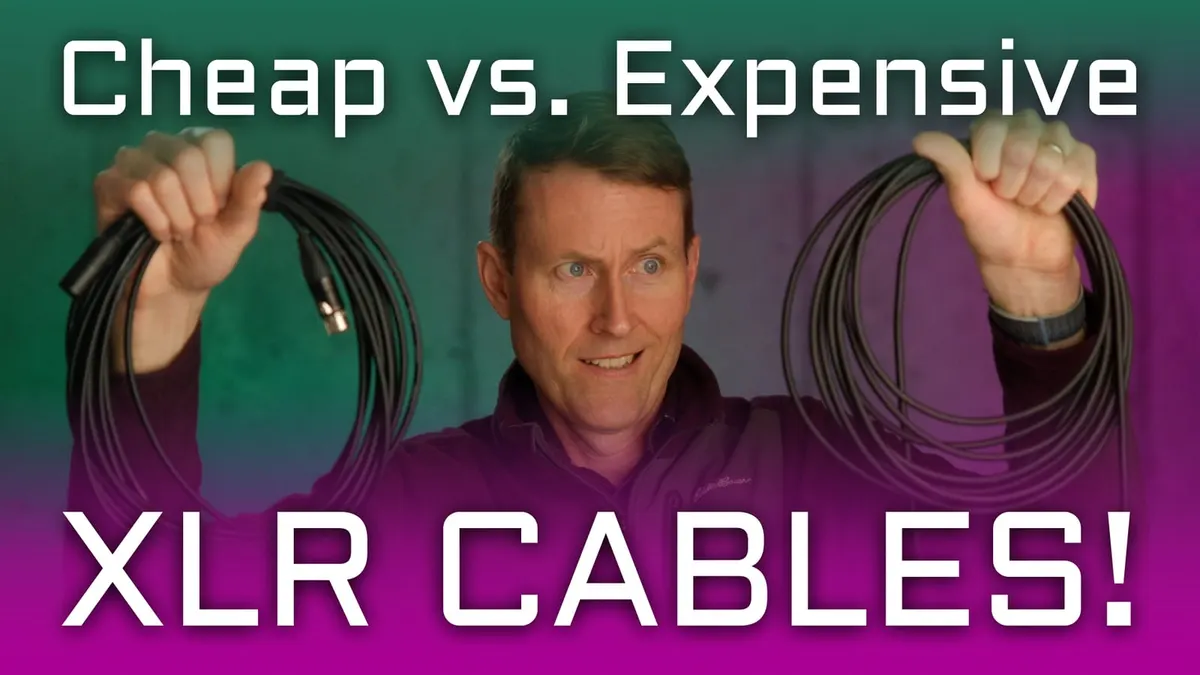
In this episode we find out if more expensive audio cables are actually better than cheaper ones. Important points to consider when choosing a cable regardless of price include the actual cabling quality as well as connector build and cable management strategy. Let’s see how it’s done!
Find SoundSpeed’s channel and cable-wrapping tutorial here: @SoundSpeeds
Some of my other studio gear:
Gear used or mentioned
The links below are Amazon, B&H Photo, Sweetwater, or other affiliate links. As an affiliate, I earn from qualifying purchases.
- Full selection of Canare XLR cables at B&H
- Full selection of Mogami XLR cables at B&H
- Sennheiser MKH50 microphone — B&H, Sweetwater, Amazon
- Sound Devices MixPre audio recorder — B&H, Sweetwater, Amazon
- Impact Turtle-Base C-Stands — B&H, Amazon
- Aputure LS 600x Pro Bicolor LED Light — Aputure, B&H, Amazon
- Aputure Light Dome III Softbox — Aputure, B&H
- Amaran 300c RGBWW Single-Point LED Light
- Amaran Spotlight SE — Aputure, B&H, Amazon
- Rosco Prismatic Glass Gobo in Cool Lavender — B&H
- Canon C70 Cinema Camera — B&H
- Canon RF 24-70 f/2.8 lens — B&H, Amazon
- Panasonic GH5 camera — B&H, Amazon
- Panasonic 12-35mm f/2.8 II lens — B&H, Amazon
Read the transcript
Do more expensive XLR cables sound better than cheap ones? Basically no — more expensive cables are generally better shielded against electromagnetic/RF interference, but otherwise sound essentially the same, with no measurable difference found in noise floor across the cables tested here (extremely cheap cables might be an exception, but none tested showed a difference).
Testing for RF interference near a wireless transmitter found no interference generated by any cable; one notable finding was that a specific microphone (JZ Microphones Vintage 11, which isn’t RF-shielded) picked up interference on its own, unrelated to the cable used. Self-noise testing with a dummy XLR/150-ohm resistor load across all cables tested showed no audibly detectable difference between them.
Cables are really two things: the cable itself and its connectors. For cable, better shielding matters for rejecting interference — Mogami and Canare (both using “star quad” style shielding) are solid recommendations; Canare tends to cost less while performing just as well in practice. A very common troubleshooting scenario: someone buys a $950 Sound Devices MixPre and a $400 Shure SM7B, then pairs it with a $13 generic cable run behind a desk next to AC power adapters, and gets a buzzing noise — the cable (and its proximity to power cables) is almost always the culprit. Keep cables away from AC power adapters, cross power cables at 90 degrees rather than running parallel to them, and never bundle audio and power cables together.
For connectors, Neutrik is the recommended brand — better strain relief at solder joints (where cables most often fail) and tighter manufacturing tolerances, meaning they rarely get stuck in gear, unlike some no-name connectors that are notorious for jamming in recorder/camera/preamp ports. Overall recommendation: Canare cable with Neutrik connectors is the best combination; Mogami is also excellent but pricier these days. Also learn to coil/wrap cables properly to avoid straining them over time — the YouTube channel Sound Speeds has a good tutorial on this. Get out there, make some great sound, and we will talk to you again soon.