
Dear Camera Bros, Please Don't Hate Audio
· Camera gear · 4:57
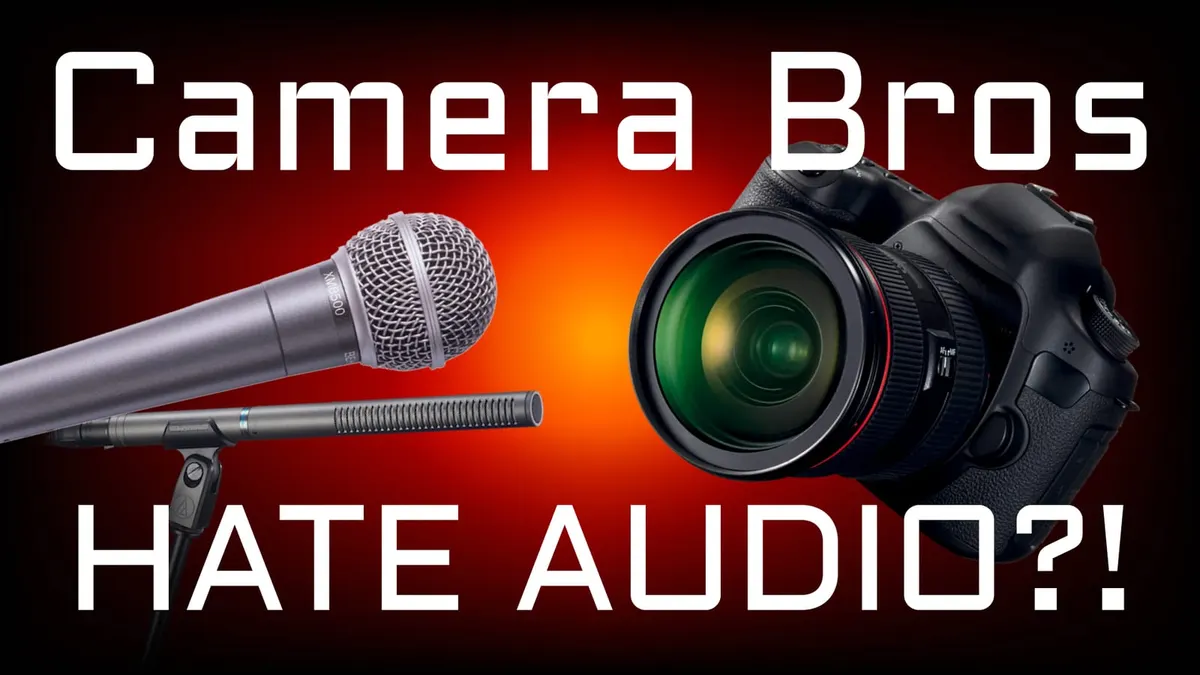
In this episode we discuss the consequences of focusing too heavily on visuals and not enough on audio during the content creation and filmmaking processes. What defines the proper balance of each component, and what can we do to develop our skills in order to get there? Let’s talk!
This episode was filmed on iPhone 16 Pro Max with the iOS camera app and existing lighting in the hotel room after a long day of work at the office. Audio recorded with the RODE Interview Pro recording microphone.
Gear used or mentioned
The links below are Amazon, B&H Photo, Sweetwater, or other affiliate links. As an affiliate, I earn from qualifying purchases.
- RODE Interview Pro — wireless/recording microphone
Read the transcript
This is aimed at camera operators, DPs, and cinematographers who love visuals but tend to hate and fear audio — often because they’ve messed it up before and never learned the fundamentals, which perpetuates the fear. This channel started focused purely on lighting/visuals and later added sound once it became clear how underserved audio education was for independent filmmakers.
To be clear, I love modern audio technology like 32-bit float recording and auto-mix — for solo operators juggling camera, lighting, directing, and everything else, 32-bit float removes a lot of the stress around setting gain correctly. But loving the tech doesn’t replace understanding the fundamentals, and skipping them is what breeds fear and avoidance.
My suggestion: spend a month deliberately learning sound fundamentals in your spare time instead of more camera or lighting content. Borrow an old non-32-bit-float recorder and practice setting gain properly — don’t push levels up near -6 to -12 dB where you’ll clip; back off so dialogue peaks around -24 to -8 dB, since modern preamps and converters are clean enough that you don’t need to gain-stage as hot as you used to.
Also worth knowing: 32-bit float won’t save you during a live stream, since the signal gets converted down before it reaches viewers, and it can still clip on the receiving end’s headphones or speakers — so you still need to know how to set gain properly for that scenario. Other fundamentals worth learning: the difference between hum and buzz and how to fix each, how to deal with clothing rustle on lavalier mics, and the difference between balanced and unbalanced cables. If you can master camera work, you can absolutely learn these basics too, and doing so will make you a better, less anxious filmmaker overall. Get out there and make some great sound. We’ll talk to you soon.