
DJI Mic 2 Review vs. RODE Wireless PRO!
· Audio · Wireless systems · 17:43
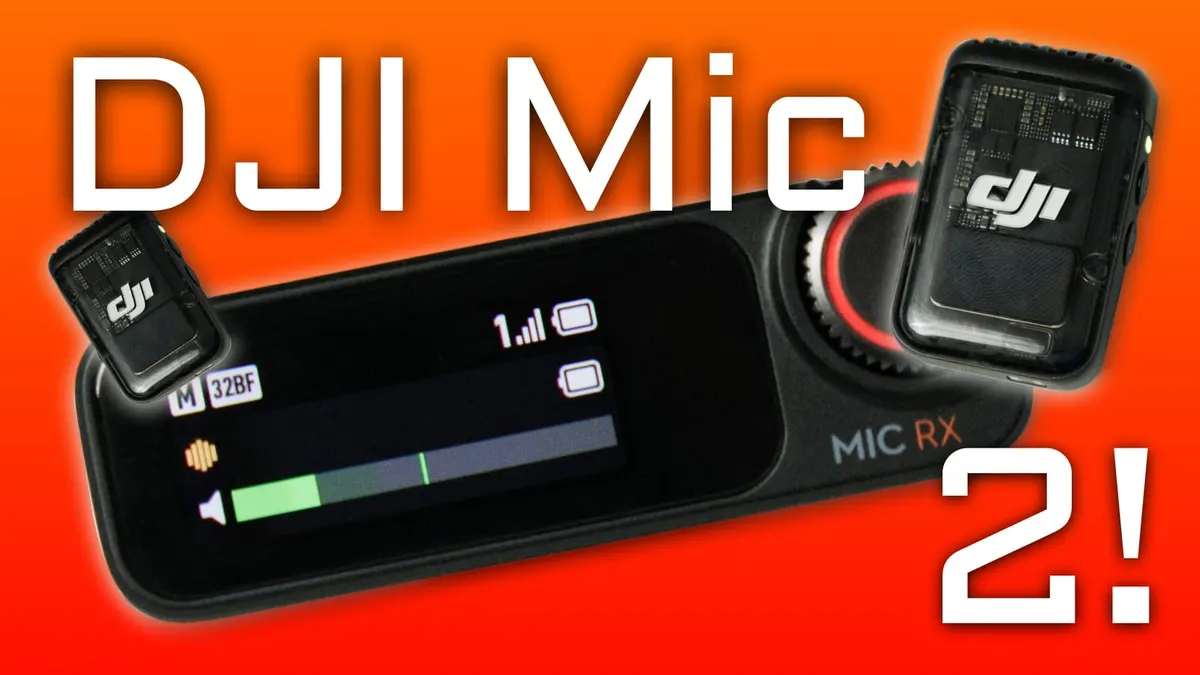
In this episode we finally review the much-anticipated DJI Mic 2! This new generation of one of the most-loved consumer wireless systems on the market brings it up to date with the rest of the comparable market: 32-bit float capability, dual-channel recording, 250 meter range, and improved 18-hour total battery life. In this video we’ll listen to some sound samples and feature tests, take an in-depth look at everything new to this version, and compare it to the RODE Wireless PRO. Let’s take a closer look and listen!
Gear used or mentioned
The links below are Amazon, B&H Photo, Sweetwater, or other affiliate links. As an affiliate, I earn from qualifying purchases.
- DJI Mic 2 All-In-One Wireless Microphone System — B&H, Sweetwater, Amazon
- RODE Wireless PRO Compact Wireless Microphone System — RODE, B&H
Read the transcript
A review of the DJI Mic 2 (this episode recorded via its transmitter in 32-bit float), comparing samples of transmitter-to-camera recording versus direct Bluetooth-to-phone connection, and the noise reduction feature on/off (it noticeably colors the voice while removing some background noise — usable but not great, better reserved for post-production in most cases).
The kit includes a dual-channel receiver and two transmitters (record two people simultaneously), a charging case rated for up to 18 hours total (a full kit power-on test with recording active on both transmitters measured closer to 4h51m before needing a recharge), magnetic clips for easy attachment without a garment clip, two fur windshields, USB-A/C charging and data cables, a 3.5mm TRS camera cable, both USB-C and Lightning phone adapters, and a carrying bag; priced at $349 US, with other configurations (like a white transmitter for wedding videography) sold separately.
Headline feature: onboard 32-bit float recording on the transmitters (up to 14 hours internal storage), letting audio recorded too hot be recovered in post — though extremely loud sources (like a jet engine up close) can still distort at the capsule itself. You can record onboard while simultaneously transmitting wirelessly, but not while transmitting directly to a phone via Bluetooth (no clear reason given). It can also transmit directly to a DJI Pocket 3. The touchscreen-plus-dial receiver interface was preferred over the Rode Wireless Pro’s, which required more memorized button-hold combinations. It has a 3.5mm output plus a headphone jack on the receiver (the Wireless Pro lacks a headphone jack), plus USB-C output to iOS/Android/computer.
Range: zero dropouts through an entire two-story house; over 100m outdoors in direct line of sight; but only 22m before the first dropout when the transmitter faced away from the receiver (comparable Rode Wireless Pro test: about 15m) — line-of-sight matters far more than the headline range spec. A safety-track feature on the receiver outputs a second, 6dB-quieter duplicate mix as insurance against unexpected clipping.
A practical self-noise test (boosted to -23 LUFS) measured an impressively clean -72 dB RMS max, likely aided by some active filtering. Sync drift testing after 15 minutes of simultaneous onboard-transmitter and in-camera recording showed no drift, though drift becomes possible over 30-40+ minutes on longer recordings, fixable by cutting and resyncing at intervals if needed. LEDs can be disabled, and record buttons can be locked to prevent accidental bumps.
Cons: the charging case can’t connect via USB-C to a computer to pull files directly (unlike Rode’s system) — each transmitter must be connected individually; batteries are internal/non-replaceable (1-year warranty, extendable to 2 via QR code registration, with paid out-of-warranty repair available); the receiver’s plastic build feels notably flexible/pliable, though the shoe mount is improved over the original DJI Mic; measured latency is 23ms (down from 29ms on the original DJI Mic), fine for most direct-to-camera or direct-to-recorder use, but worth applying as a matching delay on any simultaneously-used wired microphone input to keep phase alignment; the shiny transmitter surfaces and visible DJI branding aren’t ideal to have on camera; standalone-recorder use (without the receiver) limits some settings access; third-party unshielded lavalier mics may pick up RF interference (DJI’s own lavalier worked well); and the noise reduction feature is only really useful as a last resort in genuinely dire noise situations, not a substitute for proper post-processing.
Versus the Rode Wireless Pro: Rode sounds slightly better straight off the transmitter and has a threaded input for external mics and a longer transmitter battery life; DJI Mic 2 is a bit easier to operate, connects directly to phones/Pocket 3 more conveniently (with both connector types included), and has both a cleaner measured noise floor (-72dB vs -65dB) and lower latency advantage going the other way for Rode (6.3ms vs 23ms); Rode includes usable lavalier mics in its kit (an added cost with DJI if needed) but costs more overall; Rode also has a basic timecode feature DJI lacks. No clear overall winner — the right choice depends on which specific features matter most to your workflow. Get out there, make some great sound, and we’ll talk to you soon.