
OSEE GoStream Kit versus ATEM Mini/Pro
· Camera gear · 18:35
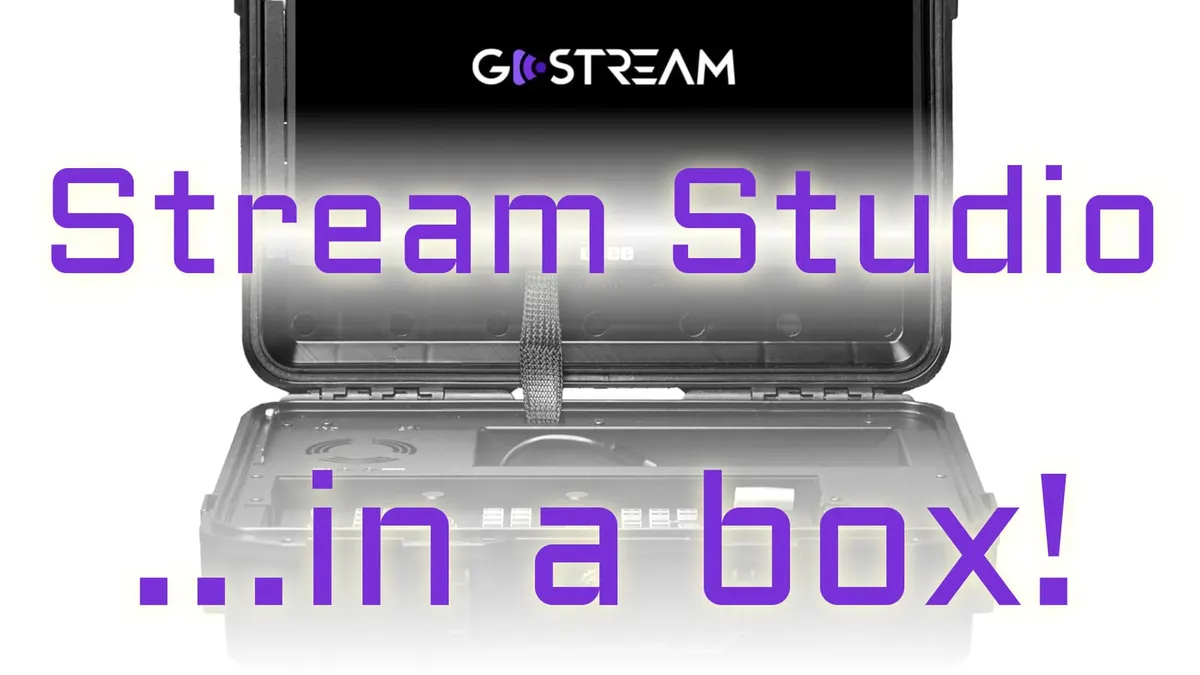
In this week’s episode we provide an overview, not a full review, of the OSEE GoStream Kit — a livestream studio with a switcher/deck and a 14 inch monitor in a hard Pelican-style case. This little livestream switcher supports 5 sources (4 HDMI inputs, a USB input, NDI source, or playback from an SD card), along with the ability to power the kit via USB PD battery bank, cine battery, or AC power. Let’s see how it compares to the very popular Blackmagic Design ATEM Mini and ATEM Mini Pro.
This kit was given to me free of charge from OSEE in exchange for making this video. They did not tell me what to say, have not paid me further, and have not reviewed this video prior to posting. All opinions shared here are my own.
Some of my other studio gear:
Gear used or mentioned
The links below are Amazon, B&H Photo, Sweetwater, or other affiliate links. As an affiliate, I earn from qualifying purchases.
- OSEE GoStream Deck — Amazon
- OSEE GoStream Kit (with the monitor and hard case) — Amazon
- Earthworks ETHOS microphone — B&H, Sweetwater, Amazon
- Sound Devices MixPre audio recorder — B&H, Sweetwater, Amazon
- Sennheiser MKH50 microphone — B&H, Sweetwater, Amazon
- Impact Turtle-Base C-Stands — B&H, Amazon
- Aputure LS 600x Pro Bicolor LED Light — Aputure, B&H, Amazon
- Aputure Light Dome III Softbox — Aputure, B&H
- Amaran 300c RGBWW Single-Point LED Light
- Amaran Spotlight SE — Aputure, B&H, Amazon
- Rosco Prismatic Glass Gobo in Cool Lavender — B&H
- Canon C70 Cinema Camera — B&H
- Canon RF 24-70 f/2.8 lens — B&H, Amazon
- Panasonic GH5 camera — B&H, Amazon
- Panasonic 12-35mm f/2.8 II lens — B&H, Amazon
Read the transcript
A look at the OSEE GoStream kit, a 4-input hardware live-stream switcher competing with the ATEM Mini line, packaged in a Pelican-style case with a built-in 14-inch monitor. Like the ATEM Mini, this is more popular with talk shows, houses of worship, weddings, and business events than with gaming streamers, who tend to stick with OBS.
It has 4 HDMI inputs, 2 HDMI outputs (one dedicated to the built-in monitor, one free for external use), and 2 USB ports for a webcam and/or feeding a virtual-webcam stream to your computer for use in OBS, Zoom, vMix, etc. Uniquely, it can be powered three ways: standard IEC AC cable, DC barrel (via included DC-to-D-Tap cable for V-mount/Gold-mount cinema batteries), or USB-C power delivery battery banks — and it’s fairly power-efficient at around 14-15 watts.
Notable advantages over the ATEM Mini line: a built-in SD card slot that can record the program output, an individual source, or the multiview, and can also play back from that card like a built-in Hyperdeck (the ATEM Minis have no equivalent); an NDI-capable auxiliary input, effectively giving you a 5th source alongside the 4 HDMI inputs; full manual control over color format and luma range on both inputs and outputs, useful for cameras that don’t auto-detect correctly; the ability to stream to up to three platforms simultaneously directly from the deck without a service like Restream.io; a headphone output with noticeably less latency than the ATEM Mini Extreme’s headphone monitoring; an adjustable audio delay (up to 400ms) per mic input to resync audio that arrives faster than a separately-fed camera signal; a physical T-bar for manually controlled transition speed; and Super Source support for combining multiple inputs (e.g., a background, a camera, and a graphics/slides source) into one composited output. It can also be controlled via a companion app on Mac/PC or via the open-source Companion app (including iOS).
Two unbalanced stereo mic/line audio inputs are included, the first with plug-in power for lavalier mics, though the second lacks plug-in power. Overall kit weight is just under 5kg (metal internal chassis, quiet fan, room for a USB battery bank).
Cons: there’s no audio processing at all in the GoStream’s mixer — no EQ, no limiter, no compressor, unlike the ATEM Mini — and there are no audio meters in the control app’s mixer page (only visible via the multiview). The case, deck, and monitor are sold only as a bundle, not separately if you already own a deck. The companion app is still on version 1.0 and clearly being refined, though it’s already quite full-featured for a first release.
Bottom line: if onboard audio processing matters most to you, the ATEM Mini wins clearly. If you want a portable all-in-one kit with a monitor, NDI input, full color/luma control, a T-bar, onboard recording/playback, or standalone deck-level control without a computer/tablet, the GoStream is a strong option. Get out there, make some great sound. Talk to you soon.