
Our Thoughts on the Adam Audio H200 Headphones
· Audio · Headphones & monitors · 16:45
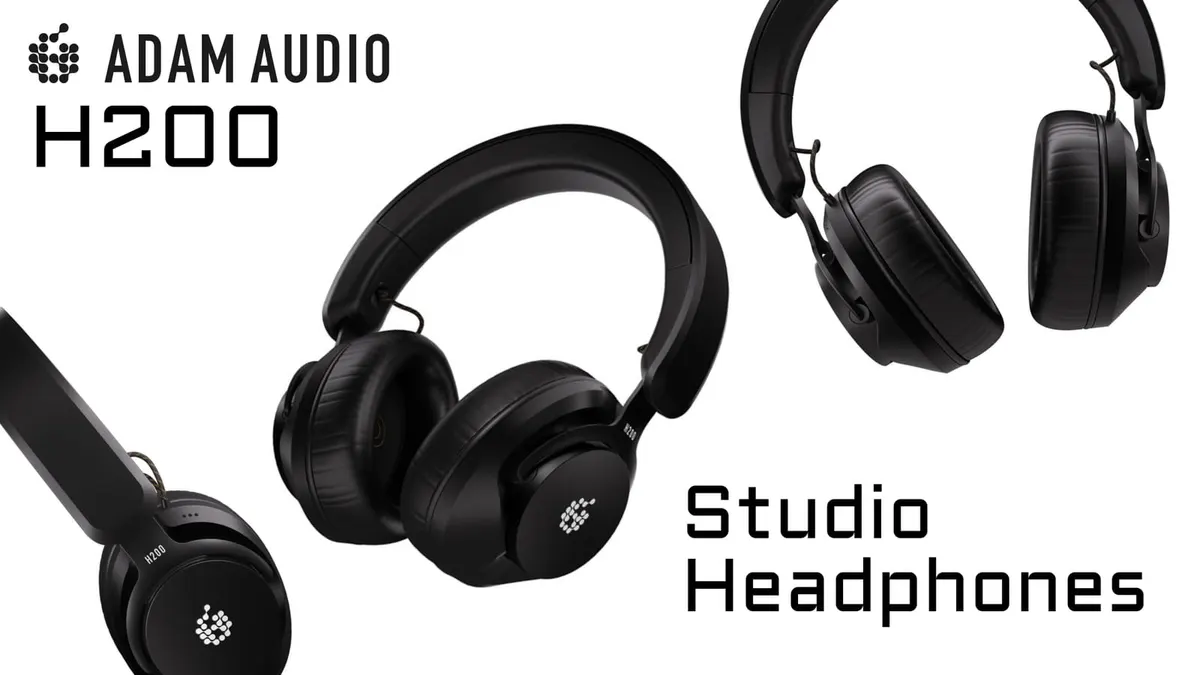
In this week’s video, Emma and I have a discussion about the ADAM Audio H200 headphones. We have differing opinions on their performance and purpose, and also get into some deeper questions of how headphones in general can affect our jobs as audio professionals. Let’s take a closer look and listen!
Gear used or mentioned
The links below are Amazon, B&H Photo, Sweetwater, or other affiliate links. As an affiliate, I earn from qualifying purchases.
- ADAM Audio H200 Studio Headphones
- Beyerdynamic DT700 Pro X — Headphones
- TASCAM FR-AV4 — Field Recorder
- Shure SM58 — Dynamic Microphone
- Shure MV7 — Podcast Microphone
Read the transcript
Can you use the Adam Audio H200 headphones for mixing audio for video? Adam Audio sent these to me free of charge and hasn’t told me what to say. These are low-impedance closed-back headphones using 40mm PEEK-performance transducers, max SPL 112.5 dB, so they work well with almost any device, from mobile devices and field recorders up to dedicated headphone amps. The ear pads feel like memory foam, are very comfortable, and are fully replaceable when they wear out. The closed-back seal gives excellent passive isolation, though it’s not active noise cancellation. The cable is 3 meters, straight, detachable, and can plug into either ear cup. The kit includes a 3.5mm-to-quarter-inch adapter and a carrying bag; priced at $180 US with a 2-year warranty.
The headphones come with a VST plugin you place on your mix’s master bus. Straight out of the box for casual listening, they have a bass-emphasized, enjoyable sound for music, but for mixing you don’t want that coloration — the plugin’s “Pure” mode reduces the bass for a more linear response, making it easier to catch mix problems. I’d actually say Pure mode makes these more useful for mixing than the similarly priced Rode NTH-100. The plugin also has an “Externalization” mode that adds intentional crosstalk between channels to emulate listening to speakers in a room, useful as an A/B reference check, plus a loudness-matching feature so you can compare modes fairly.
Comfort is very individual — I have a tall head and find the clamping force on the strong side, limiting me to about an hour of continuous wear, while my co-host found them very comfortable. If you can try them in person at a store like Guitar Center, that’s worth doing. Overall, for around $180, the H200s are really good headphones for mixing audio for video, especially once you’re using the Pure mode.
In our joint discussion: the stereo image impressed both of us, giving a clearer front/rear sense than a lot of headphones manage. We also tried the Arc On-Ear headphone correction amp, a DSP device with correction curves for specific headphone models including the H200, though it doesn’t account for individual head-related transfer functions, so results vary. With modern, bass-heavy produced music, the correction curve made a bigger difference than with older, more acoustic recordings, and it’s worth being clear with yourself about whether you want a “neutral” reference sound or the color a track was mixed to be heard with. For spoken-word / post-production mixing specifically, both of us found the H200s worked well — familiarity with a voice over the course of an edit tends to outweigh small amounts of monitor coloration, though for making precise cleanup/EQ decisions you still want confidence that what sounds off actually is off. Overall: good passive isolation, comfortable pads, individually variable clamping-force comfort, and fairly priced for what you get (with Black Friday sales sometimes dropping to $150).