
Sennheiser Evolution Microphones - e835, e935, e945, and e965
· Audio · Microphones · 7:24
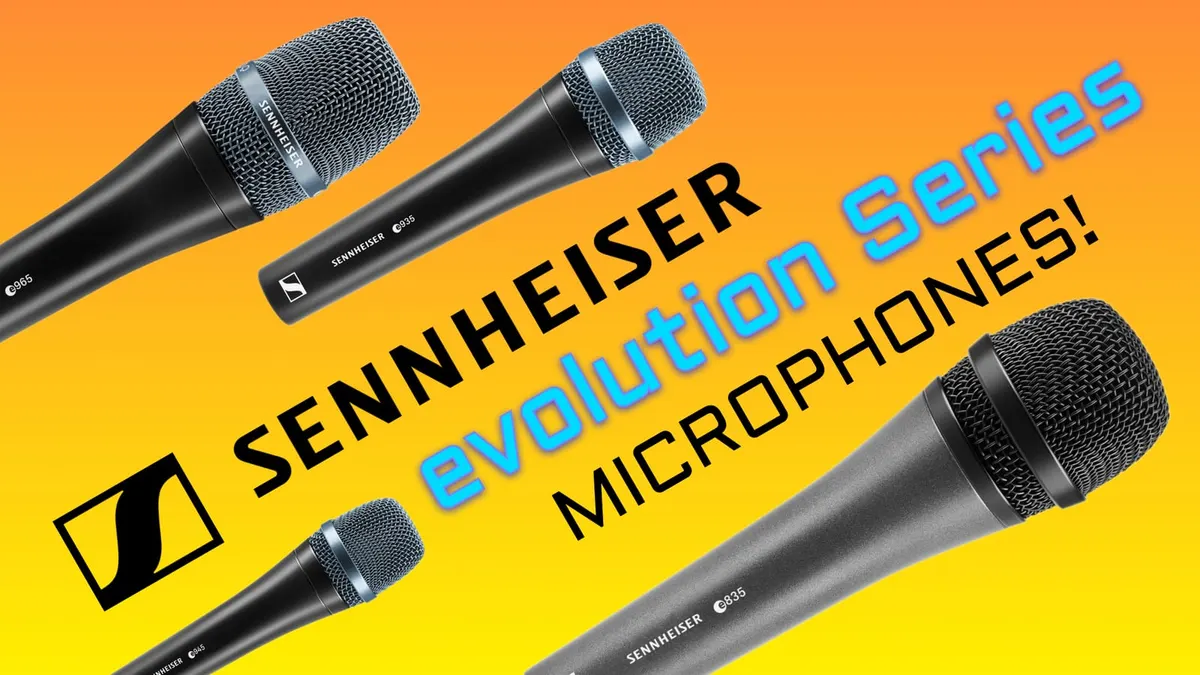
In this week’s episode we compare several microphones from the Sennheiser evolution lineup. These mics aren’t new releases, but they are new to us and we want to see how they perform in dialogue recording and podcasting/livestreaming setups. We’ll listen to samples from the e835, e935, e945, and e965 before discussing the similarities and differences we found between them. Let’s take a closer look and listen!
Gear used or mentioned
The links below are Amazon, B&H Photo, Sweetwater, or other affiliate links. As an affiliate, I earn from qualifying purchases.
Common questions
What's the difference between the Sennheiser e835, e935, e945 and e965?
The e835 is about $100 and has a bit more low end — not perfectly natural, but for the price I preferred it to the Shure SM58. The e935 is around $200 and sounded noticeably more natural to me. The e945 is $20 more with a supercardioid pattern and a more mid-forward sound that cuts through a mix. The e965 is the odd one out: a true condenser rather than a dynamic, and it has the signature warm, crisp Sennheiser signature sound.
Which Sennheiser Evolution mic sounds best for spoken word?
The e965, for my voice — it's the one that sounds best straight out of the recorder. That's what the whole episode is recorded with. It sounds more like a studio mic than a live vocal mic, and it has a pad and a high-pass filter. That said, you could make great podcasts or interviews with any of them.
Does the Sennheiser e965 need phantom power?
Yes. It's a true condenser with a large dual diaphragm, switchable between cardioid and supercardioid, so it needs phantom power. The e835, e935 and e945 are all dynamics and don't.
Read the transcript
Sennheiser e835, e935, e945, and e965. What are all these microphones? How are they different? Thank you to Guitar Center for providing me with these microphones so I could make this review. I’m approaching this from a spoken word or dialogue perspective — podcasting, live streaming, or interviewing. If you’re looking at these from a music vocal performance perspective, I don’t have a lot to offer you here.
e835 is basically a $100 microphone. It’s designed as a dynamic tight cardioid vocal mic with gentle presence boost and minimal proximity effect. This one has a little bit more low end sound to it — it’s not perfectly natural sounding, but it does sound nice, slightly ever so slightly brittle. For the price, I preferred that sound over the Shure SM58. If you’re on a tighter budget, that’s where that one sits.
e935 is meant to be a dynamic cardioid vocal mic focused on clarity, presence, and natural tone with transparent highs and warm low mids. This one sounded pretty natural — definitely more natural to my ears than the e835. This one runs about $200, twice the price.
The next one up the range is the e945, just $20 more than the e935. Sennheiser describes it as intended for situations needing exceptional presence and rich tonal warmth via a supercardioid polar pattern designed to cut through any mix. This one seems a little bit more mid-forward — more of a live vocal performance in a music kind of setting. Not a huge difference in sound from the e935 to the e945, but just a little bit more mid-forward, which means you can cut through a mix better.
e965 is quite different than the others. All of the others are dynamic microphones, meaning they don’t need phantom power. The e965 is actually a condenser microphone — Sennheiser bills it as a true condenser microphone for both stage and studio with a large dual diaphragm. It’s switchable between cardioid and supercardioid pickup. It is for capturing extraordinary detail, delivering a silky high end and a warm, well-defined low end.
To my ears, this one is the one that makes my voice sound the best right out of the recorder, and that’s what you’re hearing right now, the e965 recorded into a Sound Devices MixPre throughout this entire episode. It does require phantom power. It does sound more like a studio microphone versus a live vocal performance microphone. It also has a pad, so if you’re recording really loud sound sources you can reduce its sensitivity, and it has a high-pass filter as well.
They all sound like they’re the same family, but they have just very slight differences across them. I am impressed — I think Sennheiser’s done a really nice job. If I could choose, I would definitely choose the e965 for my voice, but I think you could make great podcasts, live streams, or interviews with any of these. Get out there and make some great sound, and we’ll talk to you again next week.