
Sennheiser MKH 8018 Stereo Shotgun Microphone Review
· Audio · Microphones · 12:26
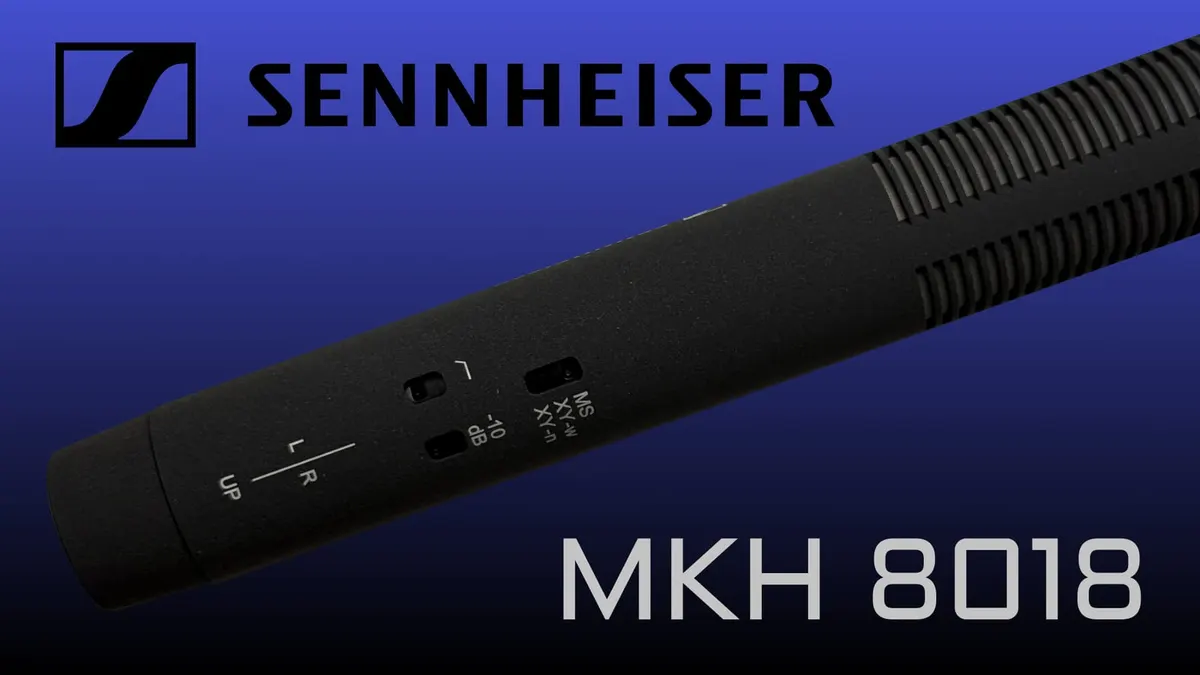
In this review, we look at and listen to Sennheiser’s newest addition to their 8000 series, the MKH 8018! This stereo RF condenser mic can function as a normal shotgun mic for dialogue recording, but also has a mid-side stereo and two XY stereo modes to capture wider ambient audio footprints with ease. In this episode we briefly explain how each mode works, listen to samples recorded with each of the different settings, and give you an overview of the full feature set. Let’s take a closer look and listen!
Gear used or mentioned
The links below are Amazon, B&H Photo, Sweetwater, or other affiliate links. As an affiliate, I earn from qualifying purchases.
- Sennheiser MKH8018 — stereo shotgun microphone
- Sound Devices MixPre — series recorders
Read the transcript
This is a new stereo shotgun microphone from Sennheiser, the MKH 8018, announced about six weeks before this review. Unlike a typical XLR mic, it has a 5-pin XLR output requiring a special adapter cable, which is why this test is indoors rather than outdoors (the primary use case) — I couldn’t find a compatible windshield/cable combo yet.
It has three modes: mid-side stereo, XY wide, and XY narrow. In mid-side mode you can use just the mid capsule’s XLR output as a standard dialogue shotgun mic, or capture the full stereo image for ambiance; XY wide/narrow gives you a directly-recordable stereo pair (no mid-side decoding needed in post, unlike mid-side mode). It’s exciting mainly because it’s the first all-in-one stereo mic in Sennheiser’s well-regarded MKH/8000 series lineup.
Features: a switchable low-cut filter at -3dB/70Hz (gentler than the MKH50’s more aggressive filter, better suited to general dialogue use), a -10dB pad, a compact medium-shotgun body about the length of an MKH416 but larger in diameter, and a similar sound signature to other Sennheiser mics for easy blending. It holds onto bass well even at distance (demonstrated with proximity samples at various distances), and like other MKH-series mics it’s RF-bias, meaning better reliability in humid/extreme-temperature conditions versus DC-bias designs. Self-noise is about average for shotgun mics, not class-leading (Rode’s NT1 still holds that title) but clean enough for production use.
The kit includes the mic, stand clamp, foam windscreen, transport tube, and a 3/8”-to-5/8” thread adapter, priced at $1,999 — not for tight budgets, but versatile since one mic covers both dialogue boom work and ambiance/stereo capture. Comparison samples included mid-side on the 8018, mid-side using a separate MKH 8050/8030 pair, XY narrow, XY wide, and a reference sample from the classic MKH416.
A notable limitation: max SPL is 126 dB SPL, so it’s not ideal for very loud sources like gunfire or aircraft — more suited to nature/wildlife ambiance, sporting events, and dialogue capture in mid-side mode. It has non-reflective Nextel paint to avoid lighting reflections, and cuts well against the rest of the Sennheiser 8000 series without needing much EQ matching. Overall take: not for everybody, but a great option if you want dialogue capture plus stereo ambiance recording without extremely loud sound sources. Get out there and make some great sound, and we’ll talk to you again soon.